Spore-Forming Probiotics: Why Survival Matters More Than Strain Count
A probiotic that dies in stomach acid before reaching the intestine cannot do anything once it gets there, no matter how promising the strain looked on paper.
Spore-forming strains like Bacillus coagulans are built to survive that journey, which is arguably the single most important design feature a probiotic product can have.
The problem nobody puts on the label
Stomach acid exists to kill things — bacteria included. Most probiotic bacteria, in their normal active form, are vulnerable to that acidic environment. Studies estimate that a substantial proportion of standard probiotic bacteria in a typical capsule or chew never survive the trip through the stomach to reach the intestine, where they would actually need to be to do anything useful.
This is rarely mentioned on packaging, because ‘contains billions of live cultures’ sounds impressive regardless of how many of those cultures are still alive by the time they matter.
What makes a strain spore-forming
Certain bacterial species, including Bacillus coagulans, can form a protective spore — a dormant, armoured version of themselves — when conditions turn hostile. In spore form, the bacterium is dramatically more resistant to stomach acid, heat and even the manufacturing process itself. Once it reaches the more hospitable environment of the intestine, it germinates back into its active, functional form.
This is a genuinely different survival strategy from non-spore-forming strains like many Lactobacillus and Bifidobacterium species, which rely on being consumed in large enough numbers that some fraction survives by sheer volume rather than by individual resilience.
Why this matters for dogs specifically
Canine stomach pH tends to run more acidic than human stomach pH, which means the acid-survival problem is, if anything, more pronounced in dog probiotics than in human ones. A strain that struggles to survive human digestion may fare even worse in a dog.
Research on Bacillus coagulans' acid tolerance and its use in animal probiotic applications is indexed on PubMed, and it remains one of the more consistently documented spore-forming probiotic species used in commercial supplements.
Does this mean non-spore strains are worthless?
No, and it would be an overstatement to say so. Non-spore-forming strains like Lactobacillus acidophilus and various Bifidobacterium species have their own substantial research bases and remain common, useful inclusions in probiotic blends. Some survive digestion better than others depending on the specific strain and how the product is manufactured.
The point is narrower: a spore-forming strain has a structural survival advantage that is worth knowing about and worth looking for on a label, rather than assuming all probiotic strains are functionally interchangeable.
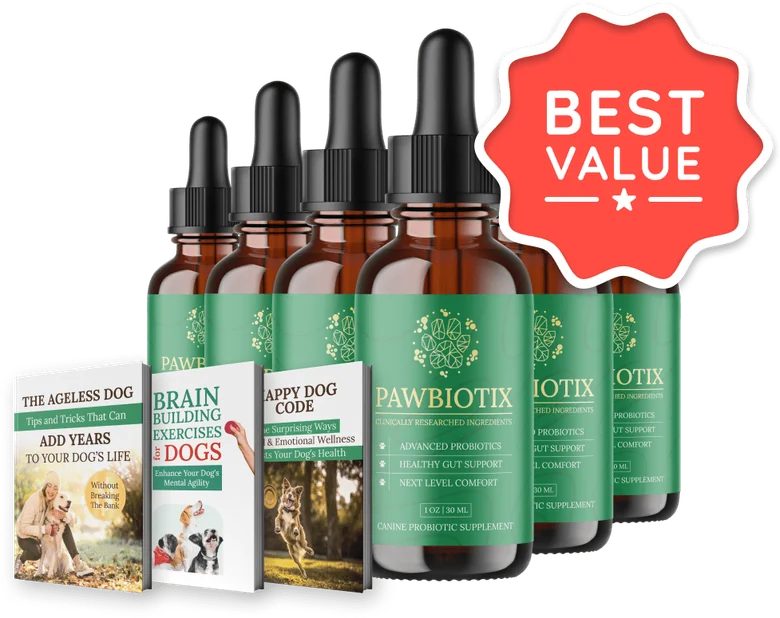
Applying this to PawBiotix
PawBiotix leads with Bacillus coagulans among its five probiotic strains, which is a sound choice given the survival advantage described above. The formula does not publish a CFU count on the pages we reviewed, which is worth knowing — see our full 90-day assessment for how that weighs against the formula's other strengths.